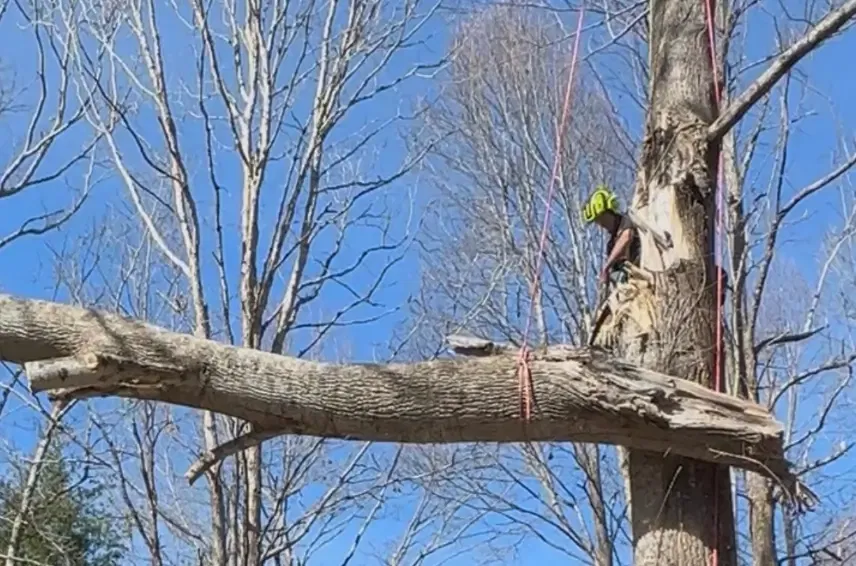
Living in the mountains of Western North Carolina, we’ve seen our share of severe weather roll through Asheville. The combination of our elevation, clay-heavy soils, and mature tree canopy creates a unique situation when storms hit. Trees that have stood for decades can suddenly become hazards, and knowing what to do in those first hours and days after a storm can make the difference between saving a beloved oak and watching it decline over the next few years.
Storm-damaged trees are defined as those that have sustained injury from severe weather events, including high winds, heavy rainfall, or lightning strikes, resulting in broken branches, split trunks, or root system failure that threatens the tree’s stability and survival. After recent severe weather events, including Hurricane Helene, devastated our region, field assessments across Buncombe County reinforced a core lesson: storm damage isn’t always visible on the surface.
Key Takeaways
- Safety First: Assess storm damage from a safe distance (at least 1.5x tree height) and never approach trees near power lines.
- Emergency Removal: Asheville permits immediate removal of trees posing an imminent threat, but you must document the hazard.
- The 48-Hour Rule: For emergency removals in regulated zones (Steep Slope, Historic Districts), submit timestamped photos to the Planning Department within 48 hours.
- The 50% Threshold: Trees with less than 50% canopy loss often recover; those with more than 50% loss or split trunks usually require removal.
- Root Warning Signs: Soil heaving or “mound lifting” at the base indicates critical root failure; these trees are unsafe.
- Hire Certified Pros: Always verify ISA credentials and insurance. Storms attract unqualified “door knockers.
Immediate Safety Assessment
Before you even think about cleanup, prioritize safety. Homeowners often put themselves at risk trying to clear debris that could wait.
Power Lines Are Life-Threatening
If a tree or branch is touching or near a power line, keep everyone at least 30 feet away and call Duke Energy immediately. Do not attempt to prune branches that are “just close to” the lines. Electricity can arc through the air or energize the entire tree through contact with another section. One North Asheville emergency call involved a homeowner who had started cutting a branch near a power line. That branch was energized through contact with another section of the tree he was fortunate to avoid serious injury.
Leaning Trees Under Tension
When a tree is partially uprooted and leaning against another object, it acts as a loaded spring. These “spring poles” store tremendous energy and require professional release cuts with specialized equipment. The NC Forest Service advises that this is the most common cause of injury during storm cleanup operations.
“Widow Makers”
Look up before you look down. Detached branches hanging in the canopy can fall without warning. Even a 3-inch branch falling from 40 feet can cause serious injury or death. These hanging hazards are called “widow makers” in the tree care industry for good reason.
Evaluating Storm Tree Damage: What Can Be Saved?
Not every damaged tree needs to come down. Field experience in Asheville suggests that many storm-damaged trees can be saved with proper care, though they may never regain their original form.
Trees That Can Typically Be Saved
- Young, vigorous trees with less than 50% canopy loss often bounce back remarkably well. Five-year-old red maples that lose half their branches can, within three years, show no signs of previous damage.
- Mature trees with broken branches but intact trunks and root systems are excellent candidates for corrective pruning. A mature white oak on Merrimon Avenue that lost three major limbs during a severe storm several years ago received structural pruning and continues to thrive today.
- Trees with minor root exposure (less than one-third of the root plate) can often be stabilized if addressed immediately before the exposed roots dry out.
Trees Requiring Removal
- More than 50% crown loss severely compromises the tree’s ability to photosynthesize. According to NC State Extension, these trees often decline slowly, becoming hazards over the next 1-3 years.
- Split trunks or major crotch failures indicate structural failure that cannot be repaired. A storm-damaged tulip poplar in Montford with a 12-foot vertical split through the main trunk, despite the homeowner’s attachment to it, was essentially standing deadwood waiting to fall.
- Root plate failure means the tree has lost its structural anchor. Trees with more than half their root system exposed or severed cannot establish stability.
Step-by-Step Response Protocol
First 24 Hours: Safety and Documentation
- Document everything with photographs from multiple angles before moving debris. Insurance adjusters require this evidence. Include photos showing the tree’s position relative to structures and property lines.
- Clear only what’s immediately necessary for safety and access. Don’t start major cutting without a professional assessment. Many homeowners have removed salvageable trees in a panic, only to later learn the tree could have been saved.
- Contact your insurance company to report tree damage to structures. Most policies cover removal only if the tree damages a covered structure like your house, garage, or fence.
Important Asheville-Specific Rule: If you’re in a Steep Slope Zone or Historic District and must remove a hazardous tree immediately, you can do so without a prior permit. However, you must submit timestamped photos and documentation to the City of Asheville Planning Department within 48 hours to avoid potential fines.
The “Wait or Remove” Decision
This is where homeowners often get confused. Here’s the clear distinction:
- Remove immediately if: The tree is leaning on a structure/power line, blocking critical access, showing active soil heaving, or has large hanging branches.
- Wait 48-72 hours for assessment if: The tree is damaged but standing stably, poses no immediate threat, and damage is primarily to the canopy. Waiting allows for rational assessment rather than panic decisions.
Within the First Week: Professional Assessment
- Hire an ISA-certified arborist for a professional damage assessment. Look for the “ISA Certified Arborist” credential. You can verify credentials at the International Society of Arboriculture website.
- Get multiple written estimates for any work beyond simple cleanup. Storm damage brings out unlicensed contractors with pickups and chainsaws, but no insurance or expertise. The Buncombe County Extension Office provides guidance on selecting qualified tree care companies after disasters.
- Prioritize work based on hazard level, not aesthetics. A leaning maple threatening your neighbor’s house takes precedence over a damaged ornamental cherry in the backyard.
Proper Pruning and Cleanup Techniques
If you’re handling minor cleanup yourself, understanding proper technique prevents additional harm to already stressed trees.
The Three-Cut Method
For branches over 1 inch in diameter, never make a single cut from the top:
- Undercut: About 12 inches from the trunk, cut one-third of the way up from underneath to prevent bark tearing.
- Relief Cut: Cut downward slightly further out from the first cut, allowing the branch weight to drop safely.
- Final Collar Cut: Cut just outside the branch collar, the swollen ring where the branch meets the trunk. Never cut flush with the trunk, as this removes the tree’s natural defense system.
What NOT to Do
- Don’t top trees: Topping stimulates weak, poorly attached sprouts that become future hazards.
- Avoid wound dressings: Research by Clemson Extension and other universities shows these products trap moisture and promote decay.
- Don’t over-prune: Removing more than 25-30% of a tree’s canopy at once severely stresses the tree and depletes energy reserves needed for recovery.
Root System Damage and Stability Concerns
Root damage is often the most serious issue after storms, yet it’s the hardest to assess.
The One-Third Rule
If more than one-third of the root plate is compromised and the lean exceeds 15 degrees from vertical, the tree likely needs removal. Lesser damage might be addressed with cabling or guying systems installed by professionals.
Soil Heaving: The Red Flag
Soil heaving around the base of a raised mound of soil in a circle around the trunk indicates major root failure, even if the tree appears upright. When you see this “mound lifting,” the structural roots have moved, and stability is severely compromised. These trees are unsafe and should be kept clear of people and property.
Protecting Exposed Roots
Exposed roots need immediate attention. Cover them immediately with moist burlap or soil to prevent drying. Exposed roots that dry out die within hours on hot days, further reducing the tree’s chance of recovery. For trees you’re trying to save, avoid soil compaction around the root zone from heavy equipment.
Post-Storm Tree Care and Recovery
Trees that survive the initial storm damage need ongoing care to fully recover.
- First Growing Season: Water deeply during dry periods (one inch per week). Storm-damaged trees have compromised root systems and are susceptible to drought.
- Avoid Fertilization: According to NC State Extension, damaged trees can’t process excess nutrients properly in the first year. Fertilization can stimulate weak growth at the expense of root regeneration.
- Long-Term Monitoring: Have an arborist inspect damaged trees annually for at least three years. Decay develops slowly, and signs of decline (sparse foliage, premature fall color) may not appear immediately.
Frequently Asked Questions
How long after a storm should I wait before removing a damaged tree?
If the tree poses an immediate hazard, remove it immediately and document the hazard for permit purposes. For trees that are damaged but stable, waiting 48-72 hours allows for rational assessment. Trees that looked severely damaged have been known to send out healthy new growth by the following spring.
Does homeowners’ insurance cover tree removal after storm damage?
Most policies cover removal only if the tree damages a covered structure like your house, garage, or fence. They typically won’t pay for removing a tree that fell harmlessly in your yard, even if it blocks your driveway. Coverage limits are usually $500-$1,000 per tree. Trees that fall without hitting structures are often considered “yard debris” rather than an insurable loss.
Can I save a tree that’s split down the middle of the trunk?
Deep vertical splits through the main trunk cannot be repaired and almost always require removal. The structural integrity is permanently compromised. However, splits in crotches between major branches can sometimes be stabilized with specialized bolting or cabling systems installed by a certified arborist if caught early, if the tree has high value, and if the split hasn’t compromised more than 30% of the trunk diameter.
Do I need a permit for emergency tree removal in Asheville?
If a tree poses an imminent threat, you may remove it immediately without a prior permit. However, in regulated zones (Steep Slope, Historic Districts), you must submit documentation to the Planning Department within 48 hours to avoid fines.
Should I fertilize my damaged tree to help it recover faster?
No. Do not fertilize in the first year after storm damage. The tree needs to expend energy on root repair and wound compartmentalization, not producing new shoot growth. Fertilization can actually harm recovery by forcing the tree to allocate resources to foliage production when it should be healing. Instead, focus on proper watering one inch per week during dry periods and protecting the root zone from compaction. You can resume normal fertilization after the first full growing season if the tree shows signs of healthy recovery.
Making the Right Call After Storm Damage
Storm damage is stressful. It is expensive. And when it involves trees you have lived with for years, it can be genuinely heartbreaking.
The hardest part of our work at ArborSafe Tree Care is telling someone that a tree they love cannot be saved. But there is another side to that story. We have also helped save hundreds of trees that others were quick to remove. Seeing those trees healthy and standing years later never gets old.
The key is acting deliberately, not hesitantly. Address immediate safety risks first. Document the damage clearly. Bring in qualified professionals for technical decisions, not guesses.
Many trees in Asheville and Western North Carolina have survived decades, sometimes centuries, of storms. With the right post-storm care, many of them can survive decades more.